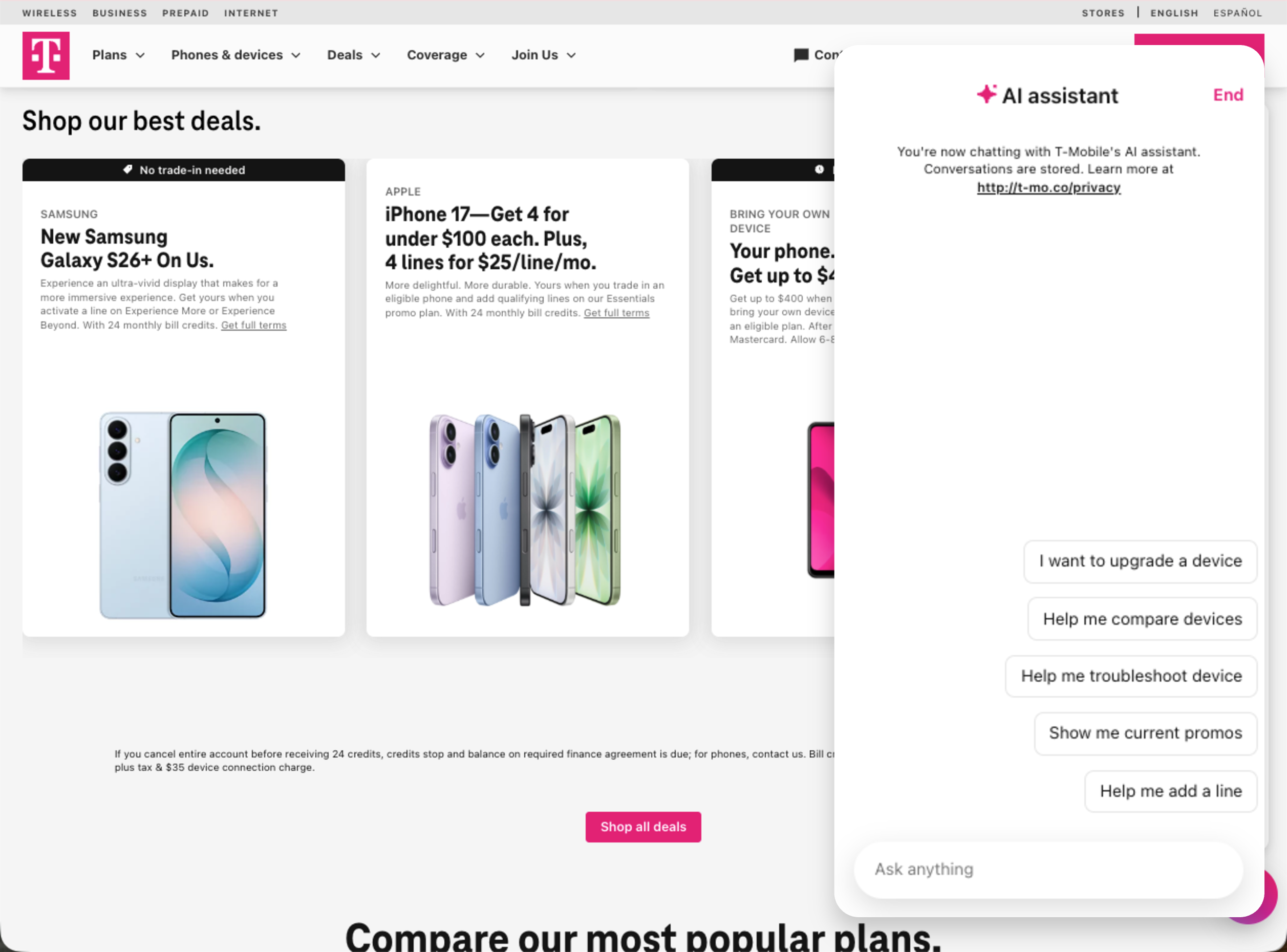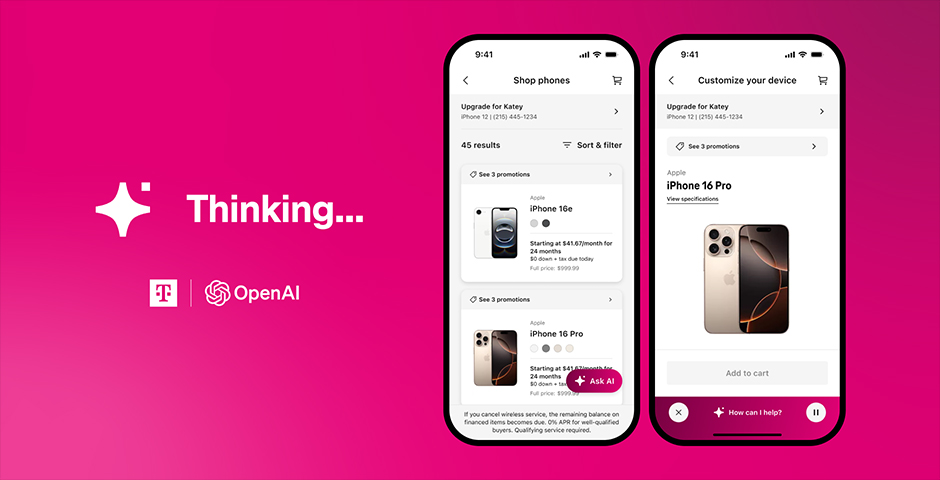
T-Mobile Agentic AI
Led 0 to 1 product design for T-Mobile's first AI assistant, from research and concept through MVP and production approval.
“Soojin bridged our AI and Product organizations and set the standard for how design leads at the intersection of the two.”
 Senior Vice President, T-Mobile
80% of customers could not finish switching online.
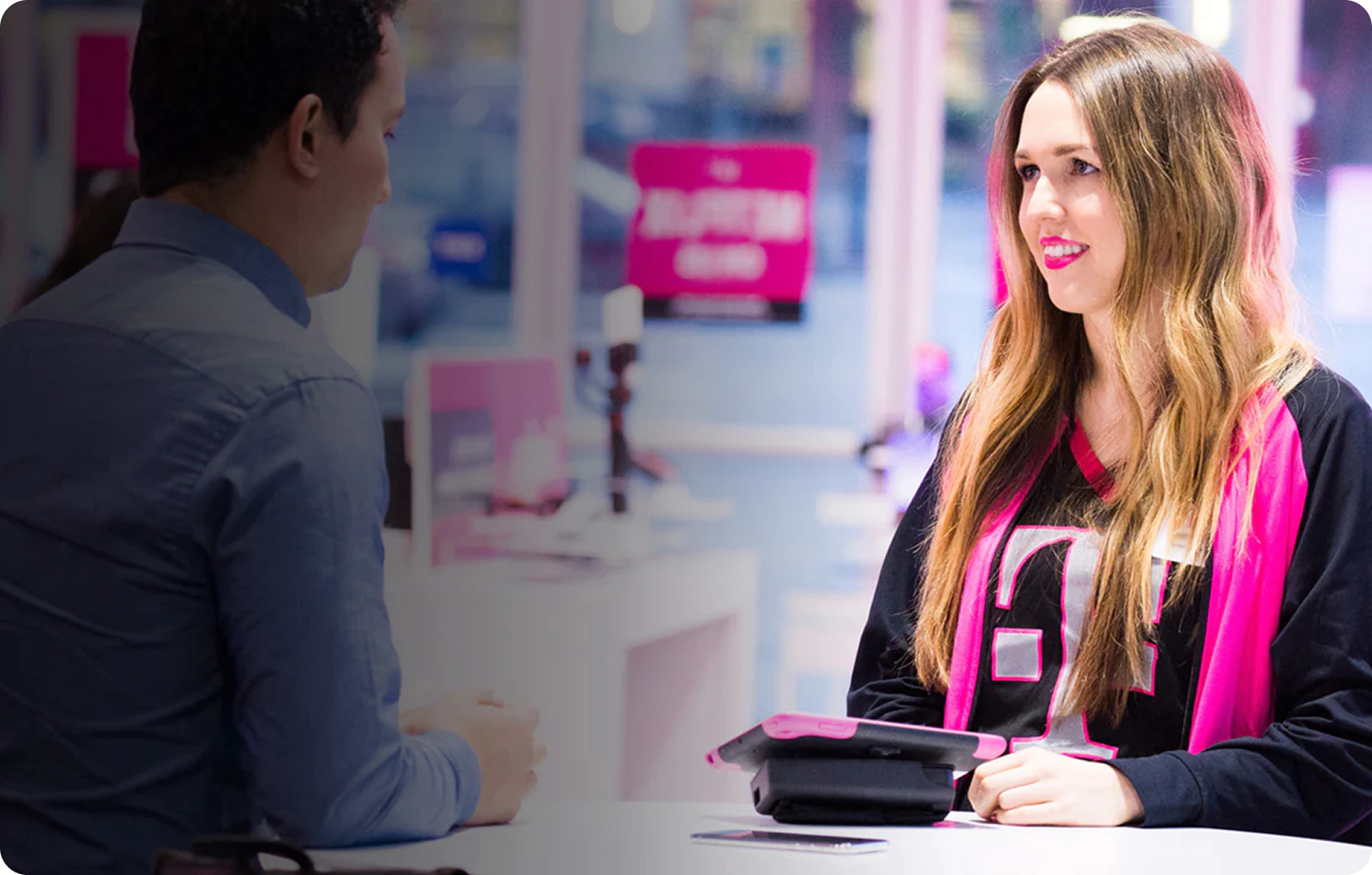
Most people who started switching on T-Mobile.com had to go to a retail store or call customer care to complete it.
Plans, devices, promotions, trade-ins, and eligibility were spread across separate pages.
If we bring personalized guidance to the digital journey, more customers can complete the process online.
An assistant that knows when to talk and when to show.
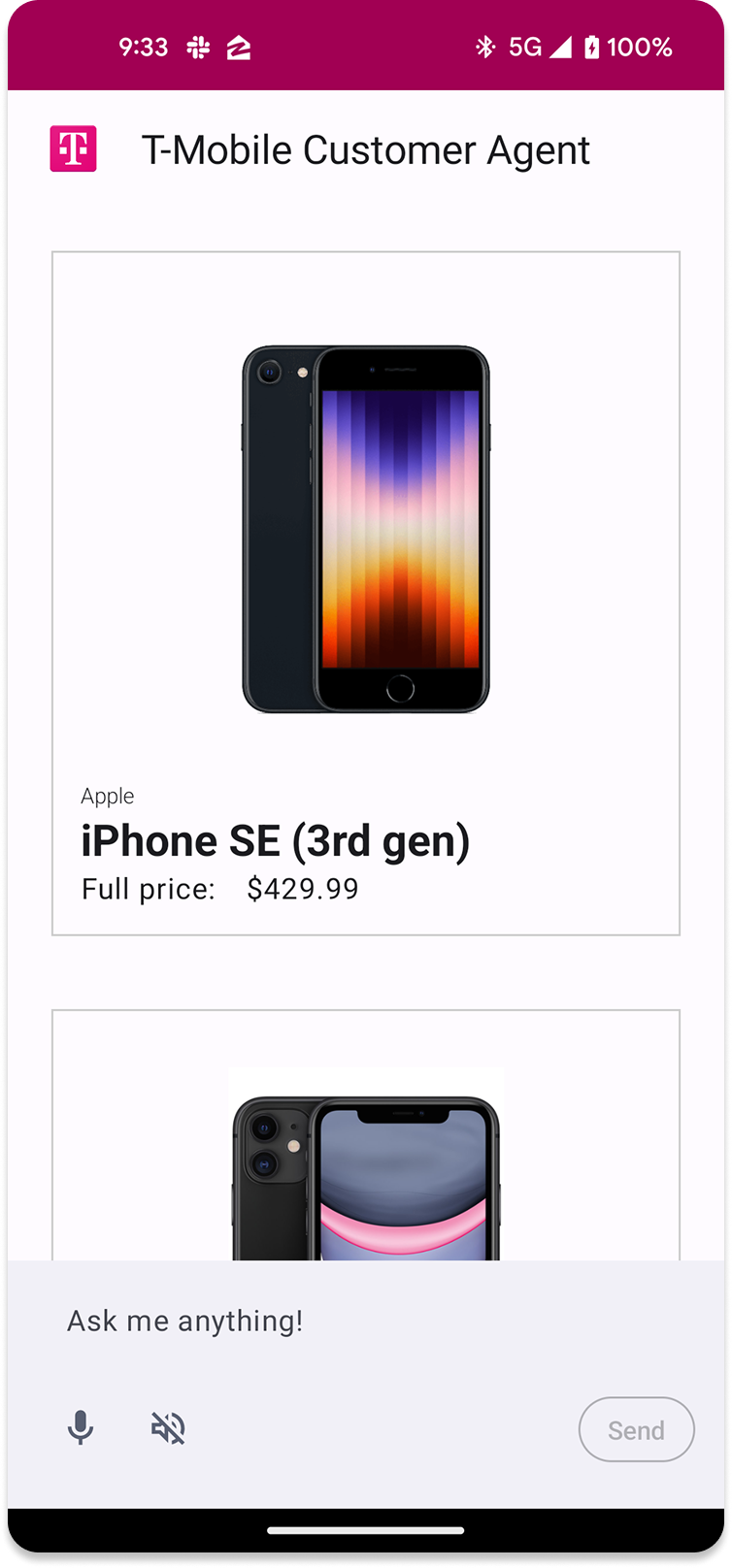
Use voice for questions, UI for comparison.
Voice worked well for open questions. Prices, recommendations, and comparisons were easier to scan visually.
Keep the current product in context.
Someone comparing two phones could ask “Which has the better camera?” without naming either device again.
Using the current page as context made the assistant part of the product instead of a separate chatbot.
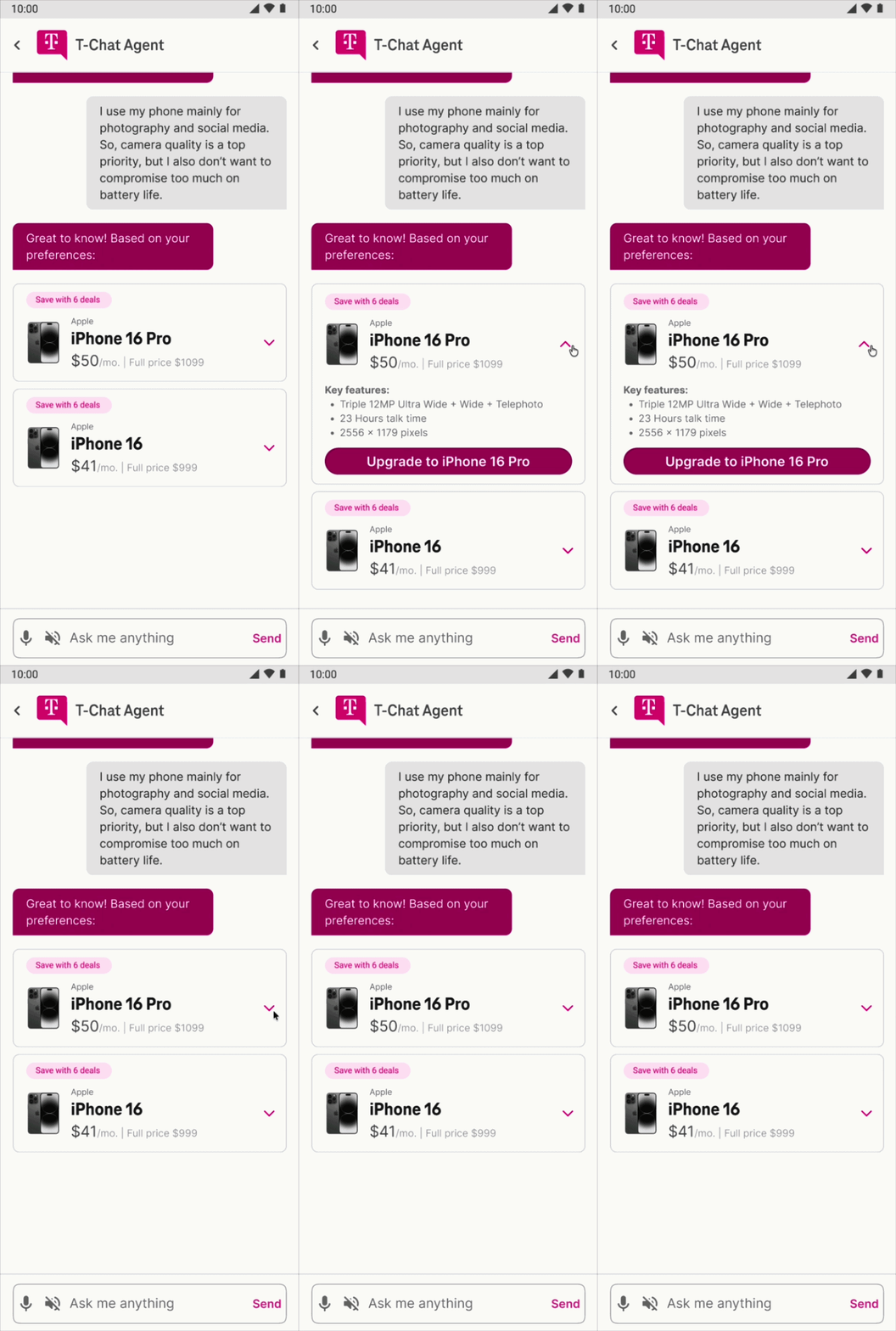
Use structured choices when tapping is faster.
Budget, storage, and trade-in questions became tappable choices instead of a long back-and-forth conversation.
Testing changed both the interaction and the system behind it.
Too much conversation slowed people down.
Repeated follow-up questions became structured UI when the possible answers were known.
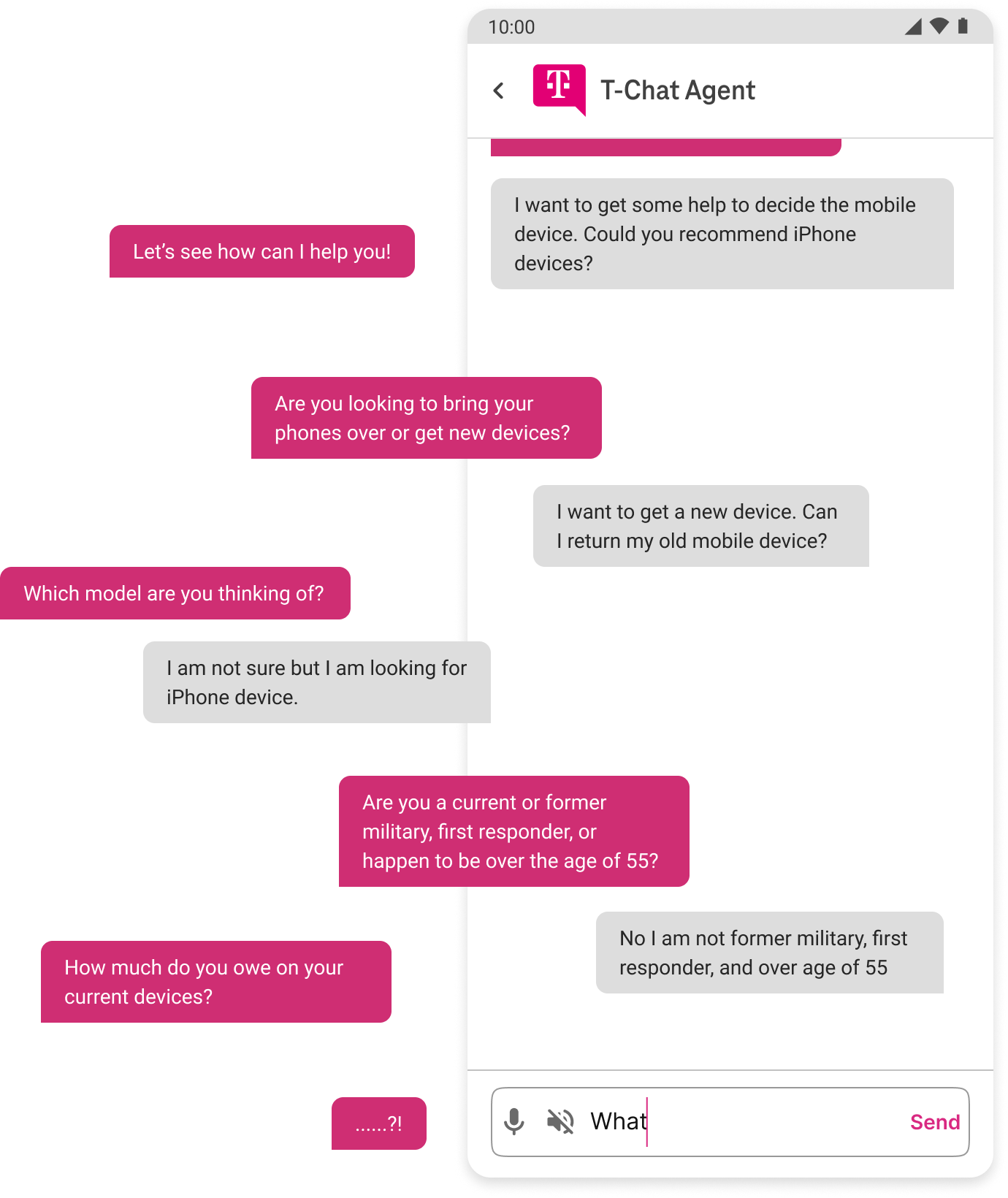
Each detail took another round of chat.
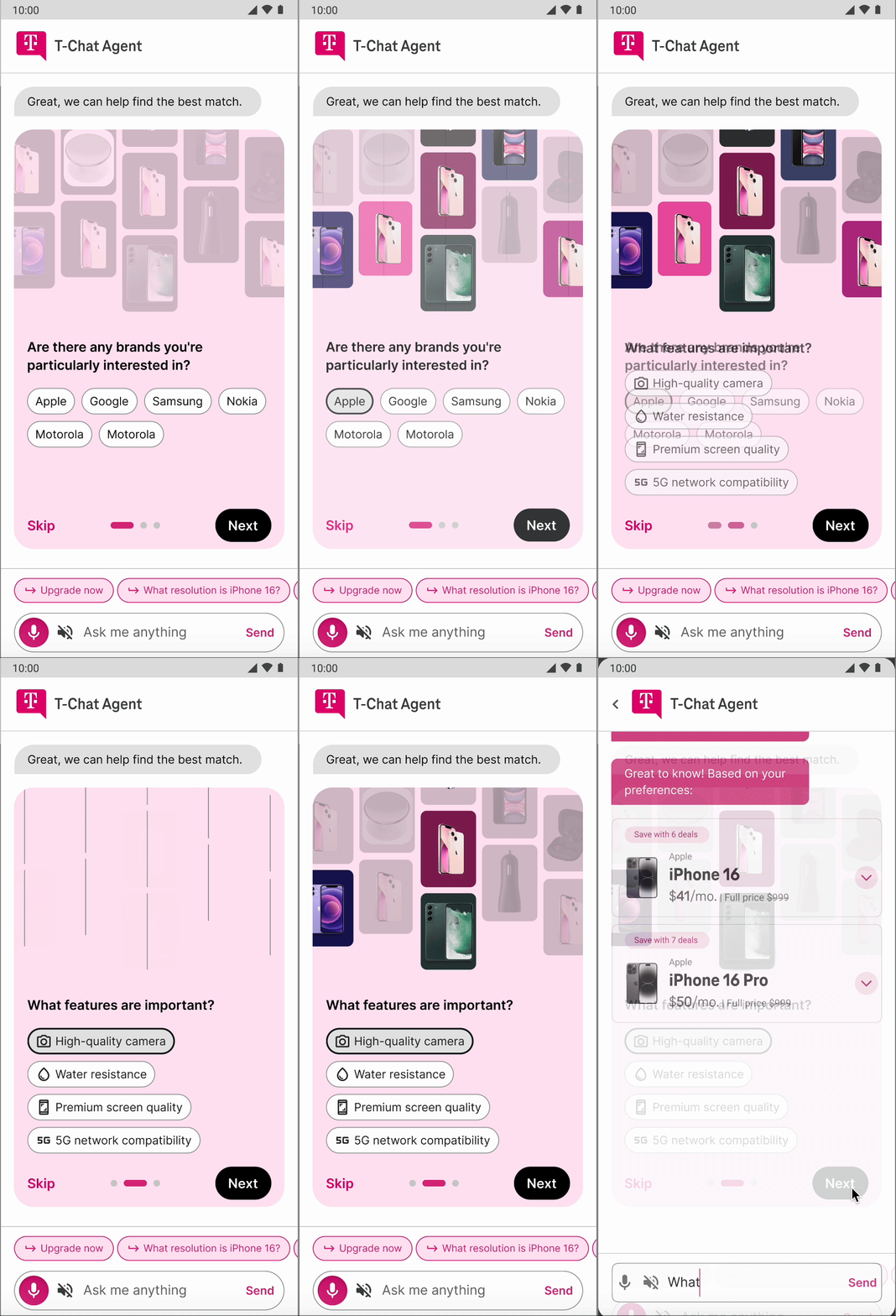

Known answers became one tap.
Generic chatbot patterns did not feel like T-Mobile.
I created reusable patterns for responses, recommendations, voice, contextual actions, structured questions, and AI states.
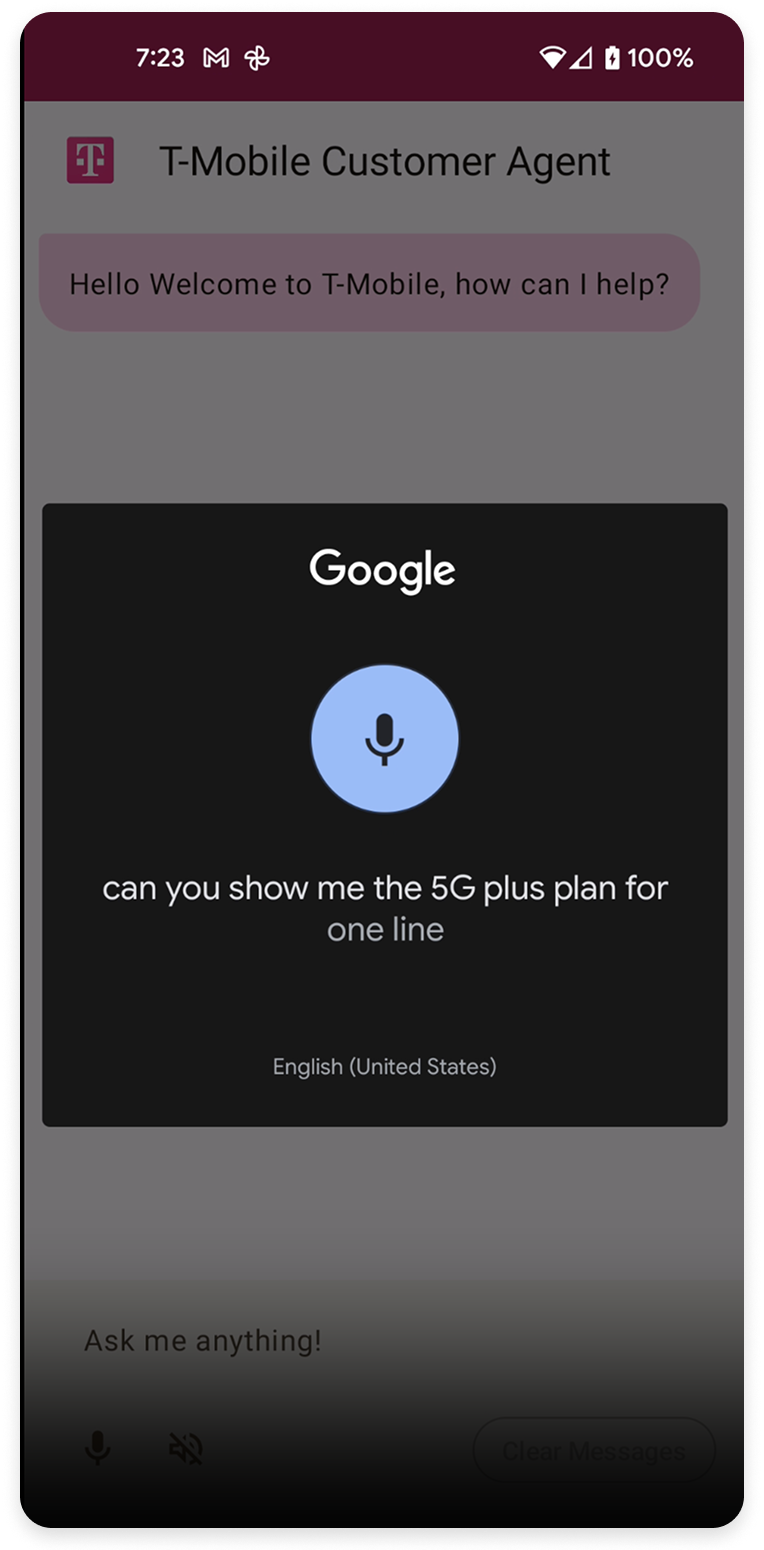
Off-the-shelf patterns that did not feel like T-Mobile.
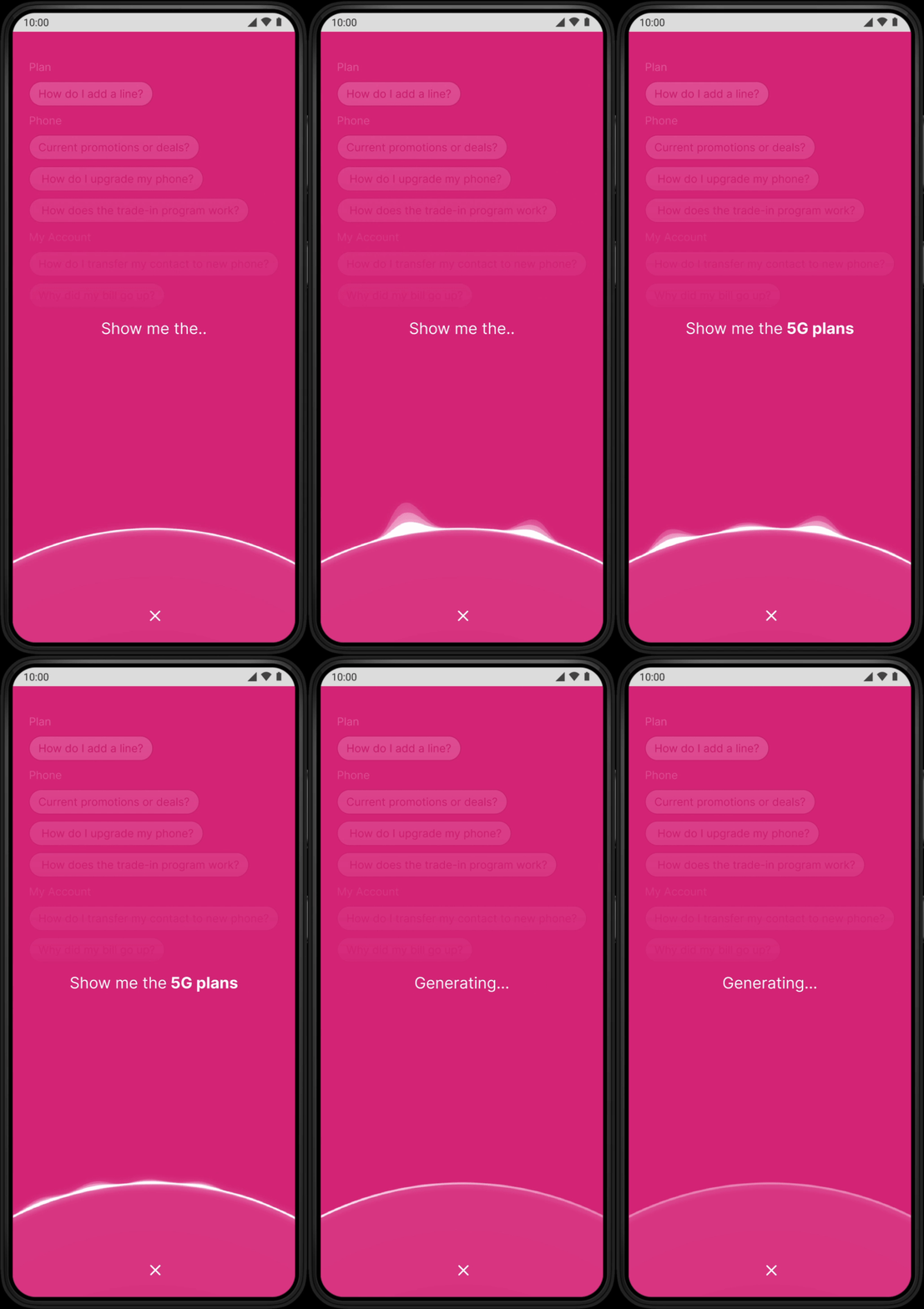
Reusable voice, response, and suggestion patterns.
No standard for AI quality existed. I built one, now used org-wide.
I owned the evaluation framework: how we judge an answer, how we test it, and how failures get fixed. I reviewed every failure with AI engineers.
What does a good answer look like?
A shared rubric so design, product, and engineering scored answers the same way.
- Factually accurate
- No hallucinations
- Completes the task
- Clear, usable UX
- Safe and on-brand
Where does it break?
We tried to make the assistant fail on purpose, then checked every answer against live production data.
How do we stop it from happening again?
Each failure became a rule for the model, the content, or the UI.
- Ground every number in real data
- Say so when information is uncertain
- Answer first, then explain
- Use structured UI to compare or act
- Speak in T-Mobile’s voice
The framework and rubrics were later adopted more broadly across T-Mobile's AI organization.
From 3 use cases to a shared AI system.
After leadership approved the MVP, the product expanded across platforms and use cases. The interaction patterns and evaluation framework became shared foundations for the broader AI work.